

Launching a makeup product is only one part of the challenge. Getting from a sketch of an idea to a formula that performs consistently, passes safety testing, and remains stable throughout its lifecycle is where many brands underestimate the complexity of the cosmetic product development process.
Working with cosmetic brands worldwide, MPlus Cosmetics supports every stage of product development through flexible manufacturing solutions tailored to each brand’s needs. Our solutions range from bulk production and semi-turnkey solutions including formulation, production, and filling into client-selected packaging, to full-service development covering formulation, packaging selection, manufacturing, and filling.
The underlying process stays the same regardless of the development model. Understanding each stage helps brands make more informed decisions and collaborate more effectively with their manufacturing partner.
What Cosmetic Product Development Means For Makeup Brands
Makeup product development covers the complete journey between a brand’s initial product vision and a market-ready product.
- Defining product objectives
- Translating them into a workable formula
- Confirming technical feasibility
- Testing for safety and performance
- Preparing the formula for scalable manufacturing
Whether referred to as cosmetics product development or formula development, the sequence of decisions remains the same.
Every decision made during development influences what is possible later, from ingredient selection and texture to product performance, claims and manufacturing consistency. A successful formula must balance innovation with the ability to deliver reliable, consistent results at production scale.
From Product Idea to Formulation Brief
Every successful formula begins with a detailed brief, and the quality of that brief influences the efficiency and direction of the entire development process. A cosmetic formulation brief translates a brand’s vision, market positioning, and desired product performance into technical requirements that guide formulation development.
Skipping this step is one of the most common cause of delays in cosmetics research and development. Requests such as “Make it feel luxurious” without defining viscosity or finish leave too much room for interpretation, often resulting in multiple formulation iterations.
An effective formulation brief should clearly define two key areas.
1. Target User, Textures and Performance Goals
The intended market and product positioning help define key development considerations before formulation begins, including the target consumer, intended use, and, where relevant, skin type. Performance objectives such as for long wear, buildability, transfer resistance, and waterproofing are then translated into formulation requirements.
Texture is also a functional aspect from the start, as the application experience and wear characteristics of a cream, stick, and liquid format differ significantly. This early decision helps define the formulation approach and influences what can realistically be achieved throughout development.
2. Shade, Coverage and Sensory Expectations
Shade range planning should account for inclusivity across diverse skin tones from the outset rather than as a later product line expansion. Coverage is equally important from a formulation perspective. Whether the goal is sheer, medium or full coverage, each level requires a different balance of pigments, texture and skin feel to achieve the desired result.
The intended finish, whether matte, dewy or satin, is also closely linked to the formulation base and ingredient selection, making it an integral part of formulation development.
Brands can tailor shade ranges, coverage levels, textures and finishes through formulation customization to create product lines that complement their brand identity and market positioning.

Formula Development and Technical Feasibility
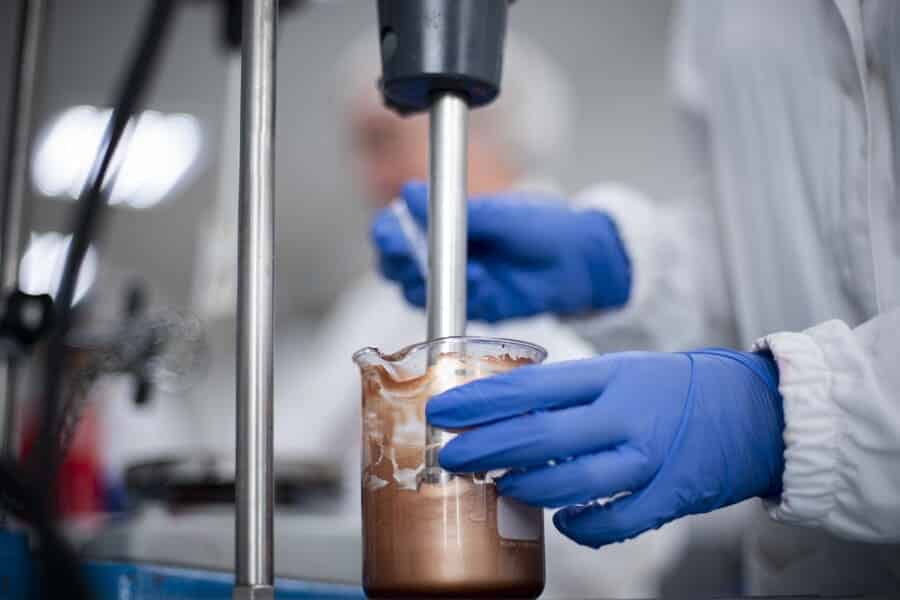
The cosmetic formulation development phase starts with ingredient selection and the preparation of the first laboratory samples once the brief is finalized. This is where technical feasibility is evaluated against the brand’s objectives, while ensuring the formulation can also comply with regulatory requirement in the target markets. Brands can customize ready-to-use formulas or develop entirely new formulations with support from our formulation experts at MPlus Cosmetics.
Ingredient and regulatory compliance checks are also carried out at this stage to verify that the formulation meets the requirements of the target markets. A formula that complies with one market’s regulations may not meet those of another, so identifying potential issues early helps avoid costly reformulation and delays later in the development process.
Functional ingredients and formulation technologies are evaluated at this stage to determine how they can contribute to the desired product performance. You can explore our product portfolio or discover our formulation expertise to learn more about our product development approach.
Testing and Performance Validation
Even if a formula performs well in the laboratory, it still needs to be tested and verified before moving into production. Internal testing typically includes formula-packaging compatibility and stability studies under different environmental conditions and temperatures to confirm shelf life and product stability during transportation.
Depending on the product category, intended use, and claims, additional validation may involve testing by accredited external laboratories, including:
- Challenge testing to evaluate preservative efficacy and microbiological protection
- NRU testing to provide an in vitro assessment of cytotoxicity
- Patch testing to help assess skin compatibility and irritation potential
- Ophthalmological testing for products intended for use near the eye area
Third-party laboratories can also validate performance claims, such as waterproof, long-wear, no-transfer, as well as specific ingredient efficacy claims where required. This stage helps safeguard user safety while ensuring that all product claims are supported by appropriate testing and validation.
Preparing a Product For Production
A tested and approved formula still needs to become a manufacturable product, making this stage critical for scale-up and packaging compatibility. Formula-packing compatibility is often revised at this stage because moving from a lab batch to production volume can reveal challenges that are not always apparent at small scale.
Brands have the option to choose the manufacturing model that best suits their internal resources and project requirements. Some opt for bulk production only, handling packaging and filling separately. Others prefer a semi-turnkey approach, where the formula is developed and produced, before being filled into packaging the brand has already sourced. A full-service makeup product development approach covers formulation, packaging, and production as one coordinated process.
Each model provides different levels of support depending on the degree of involvement a brand wants to maintain throughout the development and supply chain process. For brands evaluating whether to develop a product in-house or with a contract manufacturer, our guide on makeup brand development with a supplier explores the key considerations in more detail.
Choosing the Right Development Partner
Every successful makeup product begins with a clear idea, but its success is shaped by the decisions made throughout the development journey. Our cosmetic product development process transforms creative concepts into products that are technically sound, manufacturable and aligned with market expectations.
As an experienced private label cosmetics manufacturer, MPlus Cosmetics supports brands at different stages of development, from emerging brands launching their first product to established companies expanding their portfolio.
So, if your next makeup product exists only as an idea today, now is the time to turn it into a formulation ready for manufacturing.
Start your makeup project with MPlus Cosmetics and move confidently from concept to production.